Snow Removal Robots: Guides, Models, Costs and Compatibility
Autonomous snow removal is moving from experimental equipment toward practical systems that can clear mapped areas, return to charge and resume work. Yard Robot Lab researches the machines, surfaces, weather limits and ownership costs that determine whether the technology actually fits a property.
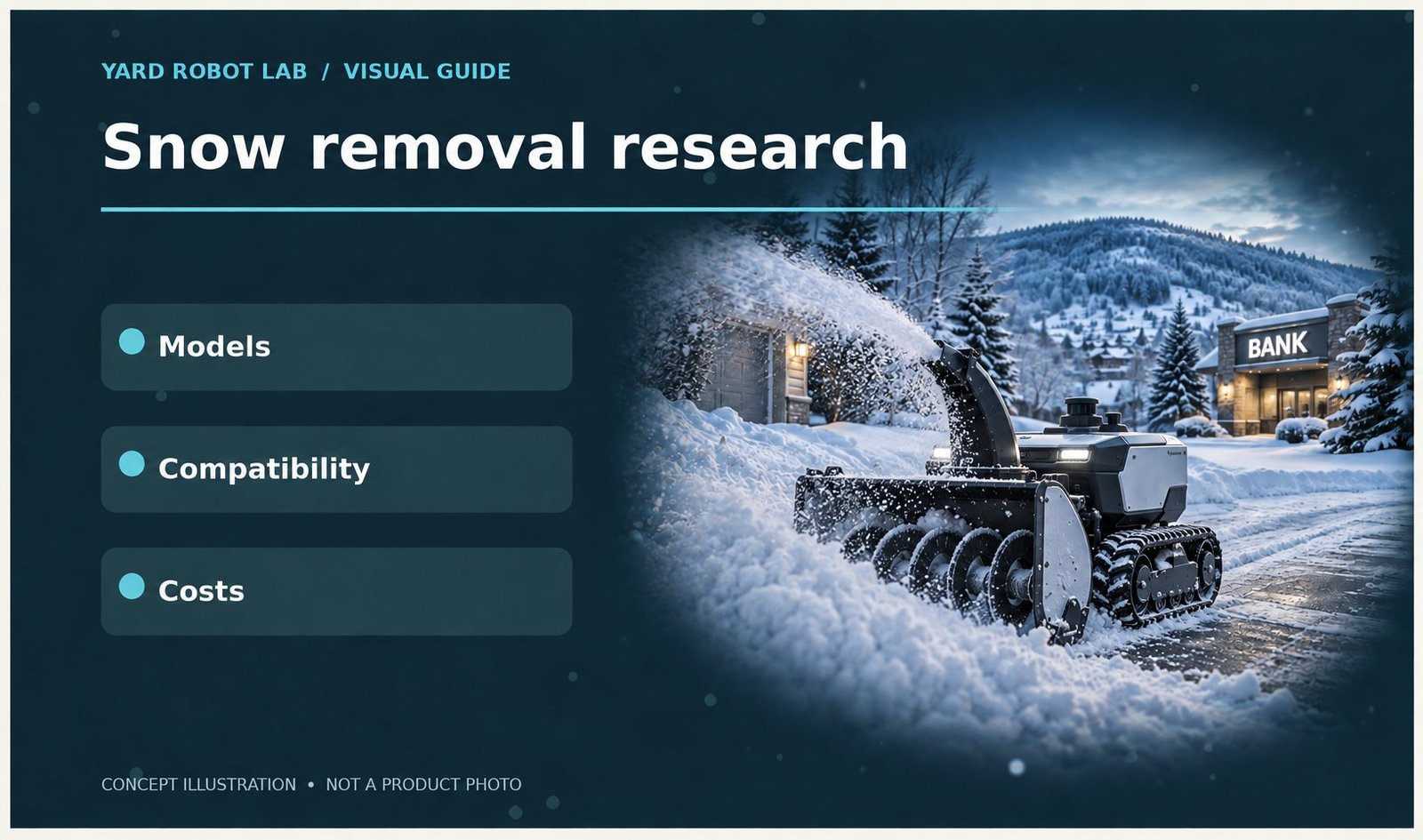
Start with the property, not the robot
A snow robot has to match driveway surface, slope, clearing width, typical snowfall, wet-versus-dry snow, obstacles, road exposure and available snow-disposal space. A machine that is impressive on a paved demonstration route may be a poor choice for loose gravel or a complicated public-road transition.
Robot snow blower or robotic plow?
A two-stage blower collects and throws snow. A plow pushes it. Blowers can move snow away from the clearing path, while plows require somewhere to stack it. Surface conditions also matter because loose aggregate can become hazardous around a rotating auger.
Current YRL snow research
- Robot Snow Blowers: What to Know Before Automating Snow Removal
- Yarbo Snow Blower (2026): Specifications, Warranty, Maintenance and Ownership
- Robot Snow Blowers on Gravel Driveways
- Robot Snow Blower Maintenance
- Autonomous Snow Removal vs Plow Service
- Yarbo Snow Blower: What Comes in the Box?
Compatibility before payback
YRL’s economic tools are deliberately secondary to compatibility. If a robot cannot safely and reliably handle the surface, snow conditions or route, a favorable payback number is irrelevant.
How we research snow equipment
We separate manufacturer specifications from hands-on testing and owner reports. Manufacturer maintenance schedules, warranty terms and surface restrictions are recorded rather than replaced with generic advice. Missing specifications are not guessed.