Autonomous vs Remote-Controlled Snow Removal: Plows, Blowers and Ownership
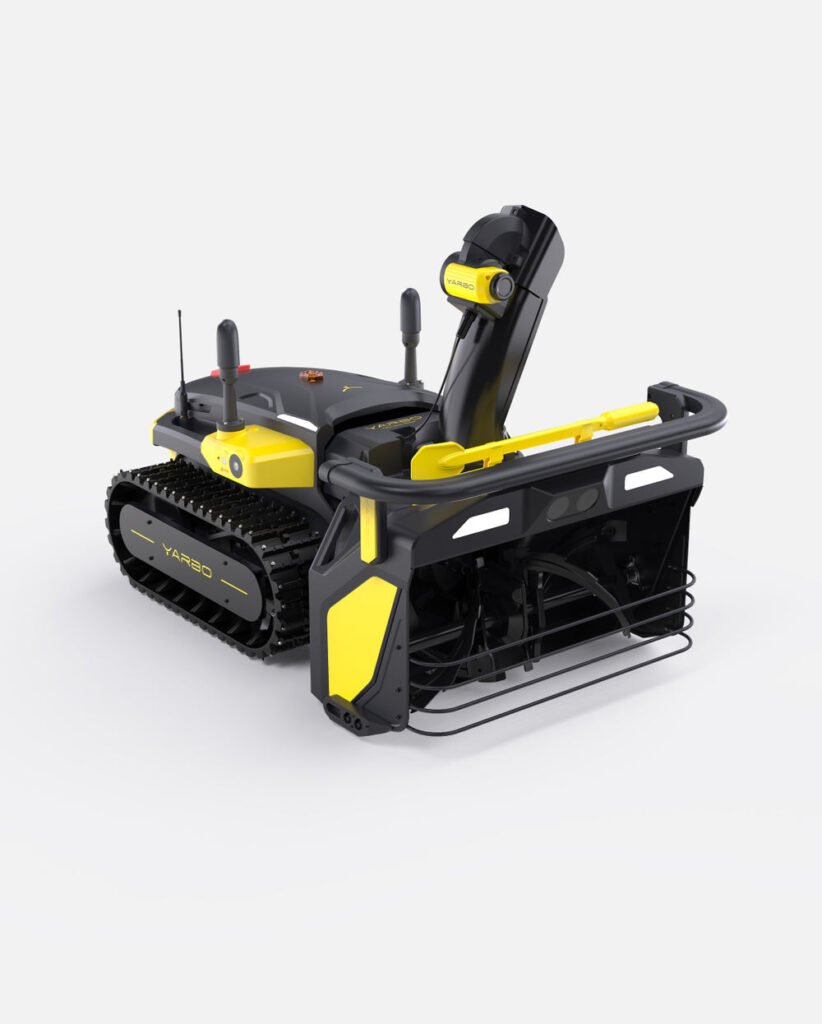
Research status: Manufacturer-document research, checked October 12, 2026. Yard Robot Lab has not physically tested this equipment.
Paid links: Yard Robot Lab may earn a commission at no additional cost to you. As an Amazon Associate, we earn from qualifying purchases.
Autonomous and remote-controlled snow equipment can both reduce physical effort. The difference is how much of the clearing route the machine handles and how much of the operator’s attention it needs.
Two decisions before buying snow equipment
Compare control and clearing method separately
| Question | Autonomous system | Remote-controlled machine |
|---|---|---|
| Who directs the route? | Software follows the configured route within its operating limits | Operator directs movement and clearing |
| What setup is involved? | Mapping, charging, positioning and operating-area preparation | Operator training, signal/control checks and route planning |
| Does it push or throw snow? | Depends on the attachment | Depends on the attachment |
| What happens when it gets stuck? | Owner needs a recovery plan | Operator needs a recovery plan |
| What should the buyer verify? | Actual autonomy, required supervision and documented limits | Control range, stop function, stability and documented limits |
Remote control can save your body without freeing all of your time. An autonomous system may reduce active steering, but setup, observation, maintenance and occasional recovery still belong in the ownership calculation. Neither label guarantees the machine is suitable for unattended use in every setting.
Plow versus blower
A plow needs somewhere to push and store snow. Think beyond the first storm: successive piles can reduce the working space. A blower needs a safe throw direction and a surface suitable for its intake. Consider parked vehicles, neighboring property, public-road edges and the manufacturer’s surface guidance.
Buying a Yarbo snow system
New buyers should compare complete packages. Existing-Core owners should investigate the module-only path after confirming generation and fit.
Check the complete Y40 snow system
Check the module for an existing compatible Core
Compare the Y Series plow blade
How to screen a remote-controlled alternative
Ask for a manual and a written support path before relying on a seller’s video. Find out who supplies replacement drive, battery, control and wear parts. Confirm whether the snow attachment is included and which base machine it fits. A mower pictured with a blade does not establish that the blade is part of the advertised package.
YRL keeps RC equipment in a separate section from the autonomous mower finder. Candidate machines can be researched without recommending them. Equipment with unresolved warranty, support or part fit should remain a research lead until the buying information is dependable.
Compare the ownership job
Measure the cleared route, not the whole property. Include the storage and charging location, the person who will intervene, the cost of wear parts, and the time you will spend preparing the area. For a gift, establish that the recipient can set up and maintain the system or arrange help.
Compare the purchase with the snow service you actually use. A robot that handles ordinary storms may not replace help with unusual accumulations, icy conditions or other work outside its documented limits.
Choose the seller as well as the machine
When the exact same model and package are available from multiple retailers, compare seller authorization, warranty eligibility, shipping and included items. YRL adds an Amazon alternative only after that exact-match check; a generic search is not a substitute for a verified package.
Match the machine to a whole storm, not one clear strip
A plow needs a place to put the snow. Mark the sides of the driveway that can accept repeated pushes, the curb or road entrance, drainage openings and any area that must remain accessible. A route can be easy to drive yet awkward to finish if each pass leaves a bank across the next route. A blower needs a safe discharge direction instead. Wind, neighboring property, parked vehicles and windows can change which direction is usable.
Separate fresh snow from the compacted ridge left by a road plow. Do not assume a promotional pass through loose powder demonstrates the same ability in a frozen bank. Ask the seller which snow conditions the exact machine and attachment are intended to handle, and keep a practical backup for conditions outside those limits. Gravel, steps and sharp grade changes deserve their own assessment rather than being treated as normal pavement.
Storm timing also matters. Several light clearing sessions can create a different job from returning after a deep accumulation. That does not mean unattended or overnight operation is automatically appropriate. The manual, visibility, required supervision, people and animals around the route, and local conditions still govern the operating plan.
A practical cost comparison for one property
Write down the complete purchase cost, required attachments, charging or battery equipment, expected wear parts and any ongoing service costs. Then estimate the active time you would spend setting up, steering, inspecting and recovering each option. Keep money and time in separate columns: reducing physical effort can be valuable even when the purchase does not create a cash saving.
For example, an owner who can steer comfortably but cannot push a heavy machine may value a remote-controlled system. An owner seeking scheduled clearing with less active control should investigate a documented autonomous installation. Neither example establishes which model will work on that owner’s driveway. The route assessment should come before the purchase, with warranty, returns and delivery confirmed for the exact seller.
Research sources and date
Manufacturer sources rechecked October 22, 2026. Product specifications are claims from the manufacturer, not YRL test results.
Before ordering, confirm the exact model, package contents, stock and delivery estimate. A family-name match alone does not establish part compatibility.
| Buying question | Autonomous equipment | Remote-controlled equipment |
|---|---|---|
| Who guides the route? | The machine follows a configured work area or plan. | You steer and supervise the work. |
| What time can you save? | Active operating time, subject to setup and interventions. | Pushing and walking may be reduced; steering time remains. |
| What setup matters? | Mapping, boundaries and the exact positioning system. | Operator visibility, signal, access and operating position. |
| What still needs attention? | Obstacles, upkeep, recovery and remaining hand work. | The operating session, upkeep and remaining hand work. |
| What should the price include? | Complete base, required equipment and installation. | Complete machine, battery, charger and task-specific attachments. |
| How do you compare terrain? | Exact model and installation limits. | Exact drive/tire and task-specific limits. |
Questions buyers ask in everyday language
Will this clear the driveway while I stay indoors?
Do not assume so from a remote-control label. Confirm the exact visibility, signal, supervision and operating conditions. An autonomous schedule also depends on a suitable mapped area and manufacturer limits.
Is a plow attachment the same thing as a snow blower?
No. A plow pushes snow into a storage area. A blower throws it through a chute. Choose based on available space, expected buildup and safe discharge locations.
Can I buy only the attachment and start clearing snow?
Only if you already own its compatible base and all required equipment. Compare the complete working package, including batteries, mounting hardware and traction accessories, rather than an attachment price alone.
Related Yard Robot Lab guides
Get the Yard Robot Brief newsletter