Robot Snow Blower Maintenance: Wear Parts and Winter Readiness
Robot snow blower maintenance begins before the first storm, with safe inspection and a record of wear. Snow-removal robots operate around moving augers, cold-weather batteries, wet snow and surfaces that change during a storm. Maintenance begins with safe inspection and accurate records, not with an assumption that every error requires a new part. This guide explains the general sequence; the exact manufacturer’s instructions determine procedures and intervals.
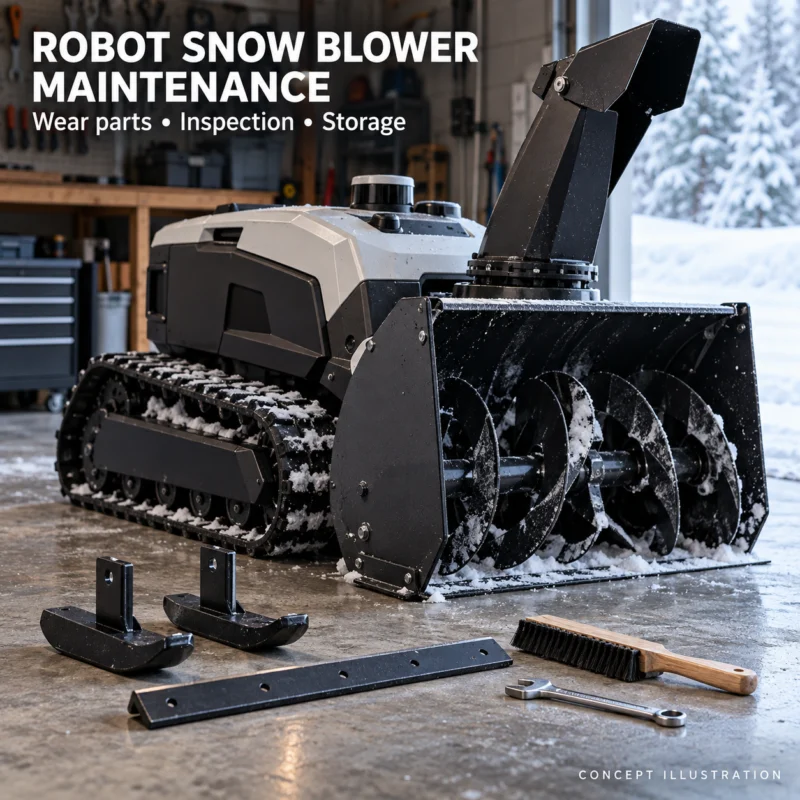
Before the first storm
Review the current manual, check the dock and travel route, and inspect the snow module for visible damage. Identify discharge areas that remain safe after multiple passes. Record the exact part numbers for manufacturer-recommended spares, if any. A shear pin from another machine is not a substitute merely because it fits a hole.
Before a scheduled clearing run
Check the intended path for stones, branches and temporary obstacles. Examine the auger, impeller, chute, scraper, skid surfaces and track condition under the model’s safe shutdown procedure. A driveway transition or municipal-plow ridge can present a different load from ordinary snowfall. If a protective part is already damaged, do not send the machine out and hope it finishes the job.
Shear pins, skid shoes and scraper surfaces
Shear pins can fail in an obstruction event to protect other components. Repeated failures call for route and machine inspection before another run. Skid shoes and scraper components wear as they meet the ground and may be treated as consumables under a warranty. Inspect them using the manufacturer’s criteria; do not impose a universal replacement date. Check the product listing and exact module generation before ordering.
Tracks and traction
Snow and ice can pack around a track or travel path. Inspect under the manufacturer’s instructions and record any recurring loss of traction by location. A track grease listed by one brand is not automatically appropriate for a different brand. Ask whether a traction accessory is supported and whether it alters an approved operating condition before adding it to the maintenance plan.
Chute blockage and safe troubleshooting
If clearing performance falls, note snow type, depth and location. Shut down as instructed before inspecting a clogged chute or cutting mechanism. Keep hands away from the auger and impeller even when the machine seems stopped, and never bypass a guard or sensor. If an error persists after permitted owner checks, contact the manufacturer or authorized service provider. An improvised stronger shear pin is not a safe repair.
Charging and storage
Inspect the dock and return route when a charging fault occurs; ice or piled snow can affect access. Record the charge level and work cycle during a long storm. At season’s end, clean, dry and store the equipment and battery according to its own manual. Do not copy a storage-charge percentage from another product.
Keep a storm log
| Date and conditions | Route and cycle | Error or wear | Action and cost |
|---|---|---|---|
| Enter snowfall and snow type | Note cleared area and charging interruptions | Name the exact symptom or part | Record inspection, replacement or support case |
The log helps distinguish gradual wear from impact damage, and it gives a better annual maintenance estimate than a guessed flat rate. Keep optional accessories in a separate cost category. Link a model’s own parts page for verified identifiers; this general guide should not imply that generic snow-blower parts fit every robot.
Start with Yarbo replacement parts and Yarbo ownership for a manufacturer-specific example. Read the gravel warning before treating an adjustable skid shoe as surface approval.
Distinguish a difficult storm from a machine fault
A heavy wet snowfall, a dense ridge at the end of the driveway and a routine overnight coating impose different loads. Note which condition preceded an error and whether the robot can safely complete the intended route under its published limits. If charging cycles cannot keep up with accumulation, that may be a capacity and scheduling mismatch rather than a broken component. Do not promise continuous clearance simply because the machine can return to its dock.
What if a shear pin fails twice in the same location? Inspect that location and the machine under the manufacturer’s safe procedure. A buried obstacle or recurring ground contact may be responsible. Replacing the pin again without resolving the cause could expose other parts to damage.
What should be stocked before winter? Start with the specific maker’s recommended items and the owner’s support route. Verify the part generation and contents of the delivered package. A backup shovel or service arrangement belongs in the plan when a repair cannot wait through a storm.
Keep warranty questions separate from maintenance. Photograph a damaged component and document the conditions before assuming that an excluded consumable or a covered defect is involved. Ask the manufacturer to decide an actual claim under its written terms.
Match the checklist to the installed design
A tracked autonomous blower can have different service points from a handheld or walk-behind machine. Start with its own operator manual and support instructions, then identify the intake, auger, impeller, chute, scraper and traction system actually present. Document whether shear pins, belts or skid shoes are owner-replaceable on the exact model. Do not transfer a generic oil-change interval to a battery-powered unit or assume every model uses the same protective fastener.
Before winter, test the dock and return route as well as the clearing route. Check that snow storage, parked vehicles and municipal plow piles do not block the mapped path. After each unusual event, record the error, weather and visible hardware condition before clearing debris under the manufacturer’s safe shutdown procedure. Never reach into a chute or auger because the machine appears idle; use the model’s prescribed isolation steps.
The parts budget should follow the route
A smooth paved route and one with abrasive grit or repeated edge contact may produce different wear. Keep actual part purchases by season rather than assigning a universal annual wear bill. Note the cost of backup clearing for storms outside the robot’s safe or supported operating conditions. A failed shear pin after an obstruction is not automatically evidence of a defective machine, and repeated failures are a reason to inspect the route or request service. Those distinctions help a future buyer estimate ownership without turning a maintenance guide into an unsupported reliability claim.
In summary: Inspect safely, document the symptom, follow the model manual and replace only identified compatible parts. Maintenance costs belong in any realistic snow-removal payback estimate.
Manufacturer example: Yarbo pre- and post-operation checks. Apply the current manual for the exact Core and module generation.
Official manufacturer reference: Yarbo maintenance guidance